Introduction:
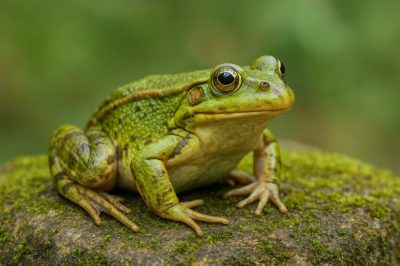
The frog is one of the most familiar and fascinating amphibians found across the world. Its unique lifestyle, living both on land and in water, makes it an excellent example for studying adaptation in vertebrates. Frogs belong to the class Amphibia and the order Anura, meaning “tailless.” They are cold-blooded animals that have developed remarkable features to survive in diverse environments, from tropical rainforests to temperate ponds.
In this blog post, we’ll explore the frog’s external and internal features, its habitat, reproduction, and its vital role in maintaining the balance of nature.
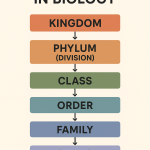
Scientific Classification of Frog
| Kingdom | Animalia |
| Phylum | Chordata |
| Class | Amphibia |
| Order | Anura |
| Family | Ranidae |
| Genus | Rana |
| Species | Rana tigrina |
Habitat and Distribution
Frogs are amphibious animals, meaning they live both in water and on land. They are found almost everywhere in the world, except in extremely cold or dry regions. They prefer moist habitats such as ponds, marshes, lakes, and wetlands. Their skin requires moisture for respiration, which is why they are commonly found in damp or shaded places during the day.
During the rainy season, they are highly active and can be easily observed near water bodies, croaking to attract mates. In winter, they undergo hibernation, a period of inactivity by burying themselves in mud to escape cold temperatures.
External Features
An adult frog has a smooth, moist, and slippery skin which helps in cutaneous respiration (breathing through the skin). Its body is divided into two main parts:
- Head – The head bears a wide mouth, two large bulging eyes with eyelids, and external nostrils. The eyes are positioned on top of the head, allowing the frog to see above water while remaining submerged.
- Trunk – The trunk is short and muscular. Frogs lack a neck and tail in their adult stage. The hind limbs are long and powerful, adapted for jumping and swimming, while the forelimbs are shorter and used for landing and support.
The toes of the hind limbs are webbed, which helps them swim efficiently in water.
Body Adaptations
Frogs show several remarkable adaptations for their dual mode of life:
- Moist Skin: Enables respiration through the skin when underwater.
- Webbed Feet: Facilitate swimming by increasing surface area.
- Camouflaging Coloration: The dorsal side of the frog is usually green or brown, which helps it blend with its surroundings and avoid predators.
- Powerful Hind Legs: Allow quick leaps to catch prey or escape threats.
- Eyes and Nostrils on Top: Let the frog stay mostly submerged while still breathing and watching for danger.
Feeding and Digestion
Frogs are carnivorous, feeding mainly on insects, worms, and other small invertebrates. They use their sticky, protrusible tongue to catch prey with great accuracy. The tongue flips out rapidly to capture insects and pulls them back into the mouth.
Once swallowed, food passes through the esophagus into the stomach, where digestion begins. Digestive juices break down the food, and nutrients are absorbed in the small intestine. The liver, pancreas, and gall bladder play supporting roles in digestion.
Respiration
Frogs breathe in three different ways depending on their environment:
- Pulmonary Respiration (Lungs): On land, they use lungs to exchange gases like humans.
- Cutaneous Respiration (Skin): In water or when at rest, gases are exchanged directly through the moist skin.
- Buccal Respiration (Mouth Lining): The lining of the mouth also helps in gas exchange when the frog is inactive.
This combination of respiratory methods allows them to survive both on land and underwater—one of the key features of amphibians.
Circulatory System
Frogs have a three-chambered heart, consisting of two atria and one ventricle. This heart pumps mixed blood both oxygenated and deoxygenated throughout the body. The circulatory system helps distribute oxygen, nutrients, and hormones, maintaining the frog’s vital activities.
Nervous System and Sense Organs
The frog’s nervous system is well-developed, consisting of the brain, spinal cord, and nerves. It controls movement, behavior, and responses to stimuli. They have five major sense organs: eyes, ears, nose, tongue, and skin.
Their tympanum (a circular membrane behind the eyes) acts as an external ear, detecting sound vibrations in air and water. Eyes are adapted for night vision and help detect even slight movement in the surroundings.
Reproduction and Life Cycle
Frogs reproduce sexually, and fertilization is external, usually taking place in water. During breeding season, males attract females by producing croaking sounds. The female lays hundreds of eggs in clusters known as spawn, which are fertilized by the male’s sperm in water.
The eggs hatch into tadpoles, fish-like larvae with tails and gills. As they grow, they undergo metamorphosis, gradually developing limbs, lungs, and losing their tails to become adult frogs. This transformation beautifully demonstrates the process of biological development and adaptation.
Economic and Ecological Importance
Frogs play a crucial role in the ecosystem:
- Natural Pest Control: They feed on insects, reducing crop-damaging pests.
- Food Source: They serve as prey for birds, snakes, and fish, maintaining the food chain balance.
- Biological Indicators: Because they are sensitive to pollution and environmental changes, their population decline often signals ecosystem imbalance.
- Scientific Research: Frogs are frequently used in biology laboratories to study anatomy and physiology.
However, habitat destruction, pollution, and climate change are causing alarming declines in frog populations worldwide. Conservation efforts are necessary to protect these ecologically valuable creatures.
Conclusion
The frog is far more than a simple pond-dwelling amphibian—it is a remarkable example of biological adaptation and ecological importance. As human activities continue to threaten their habitats, protecting frogs is not just about saving one species—it’s about preserving the delicate balance of nature. Understanding frogs helps us appreciate the interconnectedness of life and reminds us of our responsibility to safeguard biodiversity for future generations.



Leave a Reply